European Renewable Energy Shares Stumble Following US Offshore Wind Project Freeze
Impact of US Offshore Wind Freeze on European Renewables
Recent decisions across the Atlantic have sent tremors through the European renewable energy sector, leading to a notable dip in the shares of key industry players. The United States’ unexpected freeze on several major offshore wind projects has created a ripple effect, prompting investors to reassess the immediate outlook for clean energy development on this side of the pond. This development underscores the interconnectedness of global energy markets and investor sentiment.
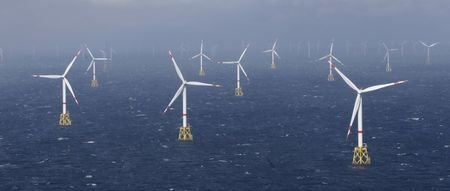
The US administration’s move, driven by escalating costs, supply chain bottlenecks, and rising interest rates, specifically targeted ambitious offshore wind farms. These projects, once hailed as cornerstones of America’s green energy transition, are now facing significant delays or outright cancellations. Such unforeseen economic pressures have cast a shadow over what was previously considered a robust and rapidly expanding market.
For European companies heavily invested in the nascent US offshore wind industry, or those within its extensive supply chain, the news has been particularly unsettling. Many European developers, equipment manufacturers, and service providers had positioned themselves to capitalise on the projected growth across the Atlantic. Their financial projections and strategic plans are now undergoing urgent revision.
The immediate market response saw a decline in the stock values of leading European renewable energy firms, particularly those with significant exposure to the offshore wind segment. Investors expressed concerns about future profitability, project viability, and the potential for similar economic headwinds to affect European projects. This cautious sentiment reflects a broader re-evaluation of risk within the sector.
This downturn is not solely a transatlantic issue; it highlights a global trend of increasing challenges for large-scale infrastructure projects. Inflationary pressures on raw materials, a shortage of specialised vessels, and intense competition for skilled labour are all contributing factors that are now magnified by the US situation. These elements collectively present formidable hurdles for the industry worldwide.
Moreover, the regulatory and permitting processes for offshore wind developments remain complex and time-consuming in many regions. Delays in securing approvals can significantly increase project costs and timelines, further deterring investment. The US experience serves as a stark reminder of the multifaceted obstacles that can impede even the most promising green energy initiatives.
In Europe, while the commitment to renewable energy remains strong, the recent US developments could prompt a closer scrutiny of existing and planned projects. Policymakers and industry leaders are likely to examine financing models and supply chain resilience more rigorously. The goal will be to mitigate similar risks and ensure the continued, sustainable growth of Europe’s own offshore wind capacity.
The long-term vision for a greener future powered by offshore wind is still very much intact, but the path forward appears increasingly challenging. This period of adjustment requires strategic foresight and collaborative efforts to overcome economic volatility and logistical complexities. It is a critical juncture for the industry to adapt and innovate in the face of evolving global conditions.
Despite the current headwinds, the fundamental drivers for renewable energy—climate change mitigation and energy security—remain powerful. The dip in shares represents a market correction rather than a repudiation of offshore wind’s potential. Investment and innovation are expected to continue, albeit with a renewed focus on cost efficiency and risk management in project execution.
Looking ahead, the industry will need to demonstrate greater resilience and adaptability. European governments and developers may seek to strengthen domestic supply chains and foster regional collaborations to reduce dependency on volatile global markets. This strategic pivot could ultimately fortify Europe’s position as a leader in offshore wind technology and deployment.
Ultimately, while the US decision has undoubtedly created a period of uncertainty, it also presents an opportunity for introspection and recalibration within the European renewable energy landscape. By addressing the underlying economic and logistical issues, the sector can emerge stronger, more efficient, and better equipped to deliver on its vital contribution to a sustainable future.