Saudi Shares Close Lower: Unpacking the Tadawul All Share’s 0.52% Dip
Analysing the Recent Dip in Saudi Arabian Equities
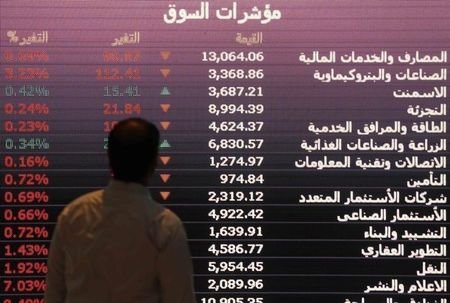
The Saudi stock market concluded trade with a noticeable dip, as the Tadawul All Share Index (TASI) registered a 0.52% decline at the close. This modest downward movement in shares on the Kingdom’s primary exchange naturally draws attention from investors and market watchers, both domestically and internationally. While not a dramatic fall, it signals a specific moment in market sentiment.
The Tadawul All Share Index serves as a vital barometer for the health of Saudi Arabia’s economy and its broader financial landscape. Comprising a diverse array of companies across various sectors, TASI reflects the cumulative performance of the Kingdom’s listed entities. Its movements are therefore closely scrutinised for insights into economic stability and growth prospects.
A 0.52% reduction, though seemingly small, prompts a closer examination of the underlying factors that may have influenced investor behaviour on the day. Such minor adjustments are a common feature of dynamic markets, yet they often provide early indications of evolving economic narratives. Understanding these nuances is crucial for informed financial planning.
One of the primary external influences on the Saudi stock market remains the global oil price environment. As a dominant global energy producer, Saudi Arabia’s fiscal health and, by extension, its equity market are intrinsically linked to crude oil valuations. Fluctuations in international oil benchmarks can swiftly translate into shifts in investor confidence within the Kingdom.
Beyond oil, the wider global economic climate undoubtedly plays a significant role. Factors such as persistent inflation, the trajectory of interest rate decisions by major central banks, and geopolitical tensions can all contribute to a more cautious investment approach globally. This often creates a ‘risk-off’ sentiment that permeates emerging markets, including Saudi Arabia.
Domestically, specific company announcements, quarterly earnings reports, and sector-specific news could also have contributed to the day’s performance. For instance, less-than-expected results from a major listed company or a shift in regulatory policy for a key industry can influence overall market direction, even if subtly.
For UK investors with exposure to Saudi Arabian assets, or those considering it, this market performance underscores the importance of diligence. While short-term dips are part of the investment cycle, they highlight the need to understand both macroeconomic trends and the fundamental strengths of individual companies within the Tadawul ecosystem.
The Kingdom continues its ambitious Vision 2030 programme, aimed at diversifying its economy away from oil and boosting non-oil sectors. This long-term strategic direction means that while daily market movements are observed, the broader narrative for Saudi equities often remains one of growth potential and structural transformation.
In conclusion, the 0.52% decline in the Tadawul All Share Index at market close, while modest, serves as a prompt for deeper analysis. Investors are encouraged to consider the interplay of global oil markets, international economic indicators, and domestic corporate developments. Staying informed remains paramount for navigating the evolving landscape of Saudi Arabian equities effectively.